Cuba's iconic antique cars sit idle as US energy blockade deepens fuel crisis
AP Photo/Ramon Espinosa
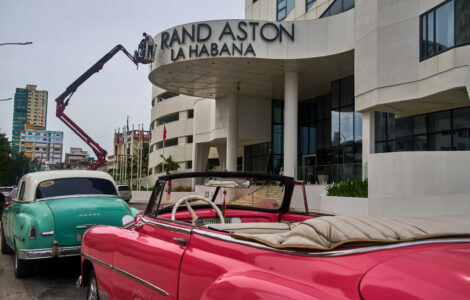
Workers repair the sign at the Grand Aston Hotel in Havana, Wednesday, June 3, 2026. (AP Photo/Ramon Espinosa)
Trending
By MARTIN SILVA REY Associated PressHAVANA (AP) -- A worsening fuel crisis across Cuba is testing the island's famed "almendrones," the vintage American cars that serve as vital shared taxis and embody the island's ingenuity and endurance.
These days, many of the iconic gas-guzzling antique cars sit idle, casualties of fuel shortages that have gripped Cuba since January and that Cuban officials blame on a U.S. energy blockade.Outside his modest concrete-block home on a dirt road in Las Minas, a town of about 2,000 people on the outskirts of Havana, Diriel Valdez is restoring a 1951 Chevrolet Deluxe. The burgundy body is intact and the original engine still works. Finding fuel for it, however, is another matter.Valdez is among thousands of Cubans waiting for fuel through a government reservation app that, for many, has become a symbol of the shortages it was designed to manage."I signed up in February ... I'm still somewhere around number 2,800," said the 27-year-old who runs an auto body shop from his home.The reward for the wait would be 20 liters (5.3 gallons) of gasoline -- enough fuel, Valdez says, to get him to the beach.
Almendrones represent Cuban improvisationThe name almendrón comes from the Spanish word for almond, a reference to the rounded shape of the large American sedans imported before Cuba's 1959 revolution.For decades, sanctions, shortages and limited imports forced Cuban mechanics to become masters of improvisation. Engines were swapped, bodies rebuilt and replacement parts sourced from wherever they could be found.On a recent night in Havana, as another blackout darkened much of the city, taxi driver Leonardo Daniel González steered a friend's glowing purple 1948 Chevrolet Fleetmaster through the darkness."These cars are passed down from generation to generation," said González, 30. "I had one that belonged to my great-grandfather. It went from him to my grandfather, then to my father, and then to me."

 AP Photo/Ramon Espinosa