
West Virginia transportation secretary grilled by lawmakers over DMV modernization contract
Trending
CHARLESTON - Lawmakers on Monday raised a number of concerns about the price tag of a new system meant to modernize computer records maintained by the West Virginia Division of Motor Vehicles.
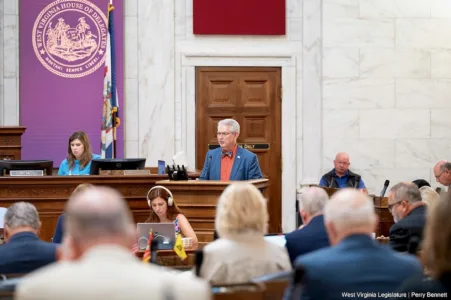
Todd Rumbaugh, the cabinet secretary of the state Department of Transportation, answered questions from members of the Joint Standing Committee on Finance on the second day of legislative interim meetings at the State Capitol Building.
Rumbaugh provided lawmakers answers to a series of written questions about the department’s recent performance audit conducted by BDO USA and released to the public by Gov. Patrick Morrisey in May.
BDO found $50.6 million in recommended improvements for the Department of Transportation, including ways to improve contractor oversight and accountability, simplifying computer systems, reducing reliance on consultants, automating accounts receivable by centralizing accounts, and updating Division of Motor Vehicles systems and procedures.
The department had already sought requests for proposals from vendors last December for a DMV modernization project, a multi-phase project intended to move the state off its aging mainframe system by Jan. 1, 2028, to maintain national compliance.
Phase one involves replacing the DMV mainframe connection and upgrading to cloud data storage, followed by tying in the state’s drivers’ license system to the new system, and modernization of remaining DMV systems. An optional fourth phase would involve replacement of the digital titling system to bring it onto the same platform.
Rumbaugh said the winning bid came from an Arizona-based vendor at $63.5 million. That vendor was not identified, but documents show a proposal from Arizona-based AstreaX, a Michael Baker company.
While the contract has been awarded, Rumbaugh said it remains under review to determine if the state will proceed.
"It just (takes) everything off the old mainframe, which has to be shut down, and working out of a cloud-based system, and allows everyone to connect back up," Rumbaugh said. "We’re currently ... reviewing the contract, trying to figure out exactly what we can afford to do and how to go about doing that."
Some lawmakers, however, were not happy with the new contract. Under questioning, Rumbaugh said multiple bids were received involving technical scores, with scores for each proposal weighted based on 75% technical implementation and 25% on price.
The low bid came from Tyler Technologies, one of the companies that implemented the DMV’s Digital Title and Registration Suite along with Champ Titles Inc. Tyler Technologies offered to do the same job for $30 million, but the company did not meet the minimum technical implementation score.
Committee members questioned why the state would pay a $33 million premium when the current vendor’s digital titling performance is rated as "very well."
"I just recently bought a vehicle and thought everything worked well," said state Sen. Robbie Morris, R-Randolph. "Why would we even have an option to replace it again? ... They didn’t have a high enough technical score when they’re already providing service and doing well?�
"I think the thought behind that at the time from the DMV was if the cost came in and was efficient enough, that instead of having one system doing everything over here and a different system there, that they should all be on the same platform," Rumbaugh said. "And that was why they put it in as an option. Whether they choose to do so yet or not has not been determined. We haven’t determined what phases we’re going to continue as the contract is awarded."
"I hope that that review is thorough because that $30 million could go to a lot of roadway projects and things of that nature," Morris said.
"It seems to me that we could have two separate systems from two separate companies that aren’t necessarily going to integrate together," said Del. Michael Hite, R-Berkeley. "Why wouldn’t we give preferential treatment to the company that is working very well already and is $30 million below what we awarded? And what does 'awarded but under review' mean?"
"Awarded means they were found to be the lowest acceptable bid (but) the contracts have not been signed yet," Rumbaugh said.
"If it's still under review, why would we have awarded it? I’m trying to come to an understanding of why we would pay 30-some million dollars more for a product from a different company from one that already has a system in the DMV and, to your testimony, is doing very well," Hite said. "Why would we not stay with the same company for $30 million less, or even give them an opportunity to meet the criteria and maybe it’d be $40 million, but still, you’re saving some $20 million."
The timeline for phase one of the DMV modernization project would take 10 months, with another 20 months for phase two. The Department of Transportation plans to use modernization to reduce the need for physical DMV offices, potentially replacing low-traffic offices with "bookmobile-style" mobile units to save on rent and leases.
Steven Allen Adams can be reached at sadams@newsandsentinel.com.