
Lawmakers question progress of Rural Health Transformation Program
Trending
CHARLESTON – Officials with the West Virginia Department of Health are working quickly to make sure the nearly $200 million first-year award for the federal Rural Health Transformation Program is obligated by an Oct. 31 deadline, but lawmakers had questions about current contracts.
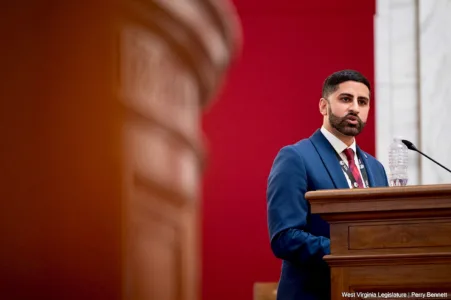
Dr. Arvin Singh, cabinet secretary of the Department of Health, provided members of the Joint Standing Committee on Health an update on Rural Health Transformation Program progress Tuesday morning during legislative interim meetings.
The U.S. Centers for Medicare & Medicaid Services announced at the end of 2025 that West Virginia was awarded $199.5 million for year one of the program.
RHTP, made possible through President Donald Trump’s One Big Beautiful Bill Act, will provide $10 billion a year to states each federal fiscal year through 2030. States were guaranteed at least $100 million for each year of the five-year program. The remaining funding was awarded through a competitive process.
West Virginia’s application outlined seven core initiatives, including establishing a connected care grid by expanding access to in-person and telehealth options, as well as an EMS "treatment-in-place" program to reduce emergency room visits; creating a unified health mobility platform to increase transportation options for residents needing access to care; forming a Mountaineer Care Force to attract and train clinical talent; and implementing Smart Care Catalyst to modernize technology and shift to value-based care.
Additionally, the state’s application features a Health to Prosperity Pipeline, linking recovery and employment; a Food as Medicine program for promoting healthy eating and physical fitness for adults and school children; and Health Tech Appalachia, a program to foster economic growth through health care technology innovation.
"The program is designed as a coordinated transformational effort rather than a collection of independent grants. Every investment is intended to support a broader system transformation and improve outcomes for West Virginians," Singh said. "We’re trying to shift how we deliver care in this state from fee-for-service as much as possible to value-based care. … It’s quality outcomes that the providers are being awarded or rewarded for, quality outcomes for the patient."
According to Singh, the program has drafted 100% of its year-one funding opportunities, comprising over 35 solicitations, with more than 80% already posted publicly. Approximately $167 million in procurement funding has been posted. While expenditures stand at $4.6 million for administrative functions, $38.8 million in year-one funding has been obligated with an additional $60 million expected to be entered into the system shortly.
"I always describe us as being on the 1-yard line now," Singh said. "All the funding is out there. We’re starting to get through the awardee process so we can start announcing who is getting these funds."
During the update, lawmakers raised several key concerns regarding the Rural Health Transformation program, primarily focusing on financial accountability, the speed of implementation and the transparency of the vendor selection process.
Questions were raised about the contract for KPMG, an international accounting firm with offices in the U.S., which serves as a program contractor.
"When I went back and looked through everything ... KPMG was awarded the initial contract based on their proposal, but then turned around a few months later and (was) awarded an amendment, which added $4.4 million to be $8 million," House Health and Human Resources Committee Chairman Evan Worrell, R-Cabell, said.
"I think that was because the initial proposal ... was coming up for renewal. We renewed it," Singh said.
House Finance Committee Chairman Vernon Criss, R-Wood, asked about the level of involvement of Morrisey and Singh in the review process, asking why the governor and secretary personally reviewed every decision memo for all 75-plus vendors and whether any prior relationships existed between those vendors and the Governor’s Office.
"The reviewers that review these contracts for the vendors, can you give me background information on those?" Criss asked. "Are they employees of the Department of Health? Or are they outside vendors that are doing the review? Or are they in the Governor’s Office? Who are the reviewers?"
"We do have executive branch employees involved," Singh said. "The governor and myself are part of the review process. When a decision memo is drafted, the governor and I do review the decision memo, and then that decision memo does go back to the committee for input as well. So ... the governor and I are involved in the process. This is a governor-led initiative, unlike other states across this nation."
"Do you know if there’s any prior relationship with the Governor’s Office with any of these vendors ... or is there any prior relationship with the Department of Health?" Criss continued. "Do any of these vendors currently have other contracts with the Department of Health or any other contracts within the State of West Virginia?"
"It’s 75-plus vendors. I wouldn’t be able to answer that," Singh said.
House Minority Leader Sean Hornbuckle, D-Cabell, asked if Singh could provide any additional information about the 75 awardees that would be receiving the $38.8 million in funding and whether West Virginia companies were being considered before offering money to out-of-state vendors.
"I want to make sure we’re being good fiscal stewards and we’re saving every dollar that we can," Hornbuckle said. "I want to make sure if there are West Virginia companies that can deliver on services and do it as good if not better at a lower price, that we are affording them that during the contracting process."
"All I can say is if you are a West Virginia company, you are being prioritized," Singh said.
Steven Allen Adams can be reached at sadams@newsandsentinel.com.